Fila Surface solution

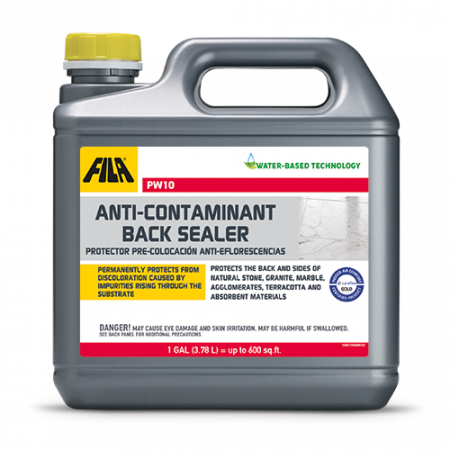
PW10 is an eco-compatible pre-laying treatment designed to prevent efflorescence while enhancing the natural appearance of porous construction materials. Its advanced penetrating formula creates a protective barrier that minimizes the migration of salts responsible for white efflorescence stains. The product also provides a reviving effect, restoring the original color and beauty of treated surfaces without altering their breathability. Suitable for both indoor and outdoor applications, PW10 improves the durability and appearance of tiles, natural stone, terracotta, and other porous materials before installation. It is an ideal solution for professional flooring and wall installation projects.
| Product Type | Eco-Compatible Pre-Laying Anti-Efflorescence Treatment |
|---|---|
| Material Base | Water-Based Penetrating Protective Treatment |
| Application Method | Brush, Roller, Sponge, or Low-Pressure Sprayer |
| Coverage | Approx. 10–20 m² per litre (depending on surface porosity) |
| Drying Time | Approximately 1–2 hours before installation |
| Full Effectiveness | Approximately 24 hours after application |
| Suitable Surfaces | Natural Stone, Terracotta, Brick, Concrete, Porcelain, and Ceramic Tiles |
| Finish | Natural Finish with Reviving Effect |
| Pack Size | 1 L, 5 L, and 10 L Containers |
| Storage | Store in a Cool, Dry Place Away from Direct Sunlight |
Most efflorescence problems are misunderstood. People assume the staining happens because of something applied to the surface, but the real cause usually sits underneath, in the screed, the adhesive, or the substrate itself. Salts, tannins, and ferrous substances dissolve in moisture and slowly migrate upward through the material until they reach the surface and crystallise into visible white patches. PW10 is applied to the back and edges of the tile or slab before installation specifically to block that migration route, rather than trying to treat the symptom after it appears on top.
CretePro Trading supplies Fila PW10 to contractors and stone fabricators across India who need a genuinely effective way to stop white efflorescence stains before they ever show up on a finished floor, and it is one of the more technically involved products in the Fila range once you understand what it is actually doing beneath the surface.
FILA PW10 is a water-based formula built from silica compounds and potassium silicates. Once applied to the back and sides of the material and left to dry, it forms a protective barrier that blocks salts and contaminants from travelling upward while still letting water vapour escape, which is what keeps the material breathable instead of trapping moisture inside. Independent testing has shown it reduces water absorption by up to 85 percent while maintaining breathability above 90 percent compared to untreated material, which is a meaningful balance since a barrier that blocks moisture completely without allowing vapour to escape can cause its own problems over time.
One detail worth knowing is that FILA PW10 is formulated so it does not significantly weaken adhesive bond strength once the tile is laid. Pull-off testing comparing treated and untreated material showed adhesion values in the same range after 28 days, which matters because installers are sometimes hesitant to add a pre-treatment step out of concern it will interfere with the bonding process.
The application needs a completely clean, dry back surface, free of dust and residue, before the product goes on with a brush or sprayer. Drying takes around 12 hours in warmer conditions between 20°C and 40°C, or up to 24 hours in cooler conditions between 10°C and 20°C, and the material should not be bonded until that drying window has passed.
It is not recommended for the front of polished or glossy surfaces, since accidental drips or overspray on a polished face can leave visible marks, so careful masking or application technique matters on finished-face materials.
If efflorescence has been a recurring problem on past projects, or you are working with stone types known to be prone to it, our team at CretePro Trading can help you plan the right pre-laying treatment before installation begins rather than dealing with stains after the fact.
It is applied to the back and edges of the material before installation, not the visible front surface, since its job is to block contaminants rising up from underneath.
No, testing has shown adhesion values remain in the same range as untreated material, so it does not significantly interfere with bonding.
Around 12 hours at warmer temperatures between 20°C and 40°C, or up to 24 hours at cooler temperatures between 10°C and 20°C.
It is not recommended for the front of polished or glossy surfaces, since overspray or drips can leave visible marks.
No, it maintains breathability above 90 percent compared to untreated material while still blocking moisture-borne contaminants.
Fila Surface solution
Fila Surface solution
Fila Surface solution
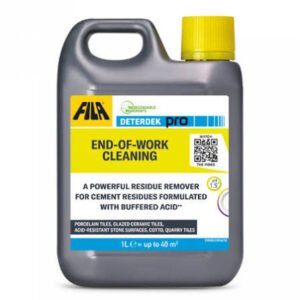
Fila Surface solution
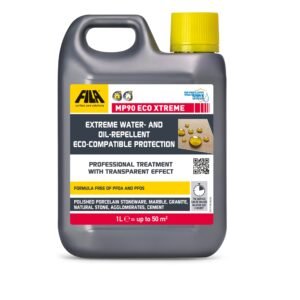
Fila Surface solution
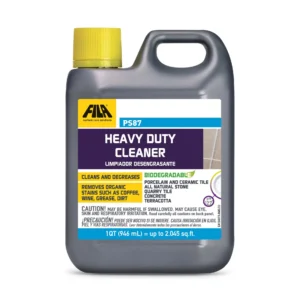
Fila Surface solution
Request a quote with technical data sheet and pricing.