

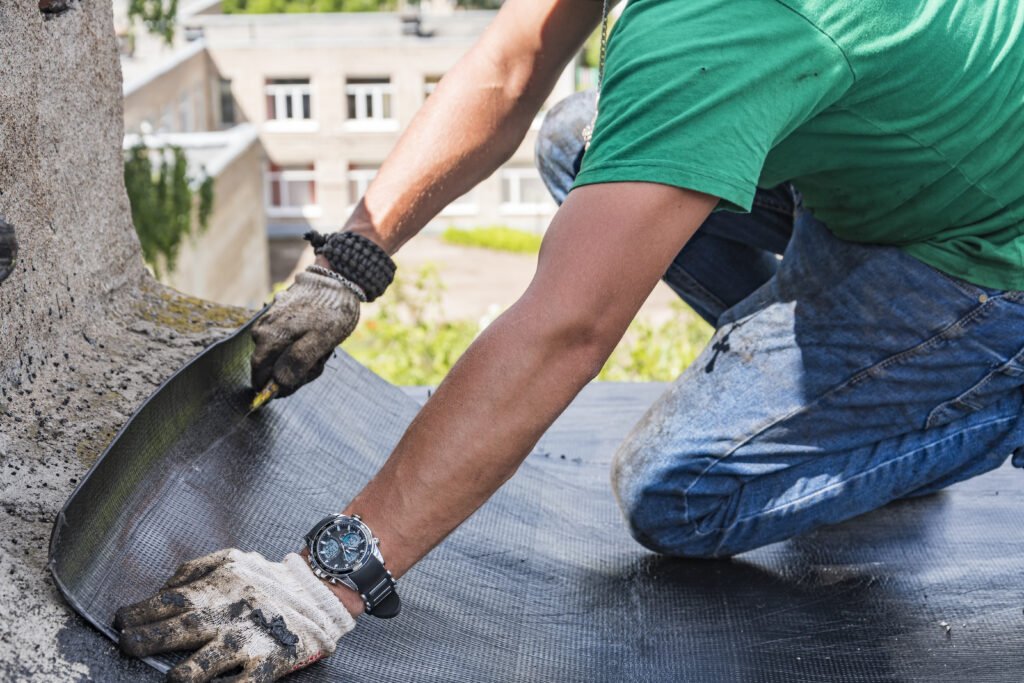
Leaking terraces, damp bathroom walls and seeping water tanks are among the most common complaints in Indian homes and commercial buildings. In most cases, the problem is not the concrete itself but the hairline cracks that open up as the structure expands in summer heat, contracts in cooler months and settles over time. A rigid coating cracks along with the substrate, and water finds its way in again. This is where a flexible cementitious membrane such as MAPEI Mapelastic Smart makes a real difference.
In this guide, we explain what Mapelastic Smart is, where it performs best, how to apply it correctly and how it fits into a complete waterproofing and tiling system.
What Is MAPEI Mapelastic Smart?
Mapelastic Smart is a two-component, high-flexibility cementitious mortar developed by MAPEI for waterproofing and protecting concrete surfaces. Component A is a 20 kg bag of cement-based powder and Component B is a 10 kg drum of polymer liquid. The two are mixed in a fixed 2:1 ratio without adding water, which keeps every batch consistent. Once cured, it forms a continuous, elastic membrane that stays bonded to the substrate and bridges fine cracks without rupturing. It meets EN 1504-2 requirements for concrete protection and is classified under EN 14891 as a waterproofing layer for use beneath ceramic tiles.
Where Can You Use Mapelastic Smart?
Its brushable consistency suits irregular surfaces and detailing that sheet membranes struggle with. Typical applications include:
- Terraces and balconies, before laying tiles or stone
- Bathrooms, shower areas and kitchen wet zones
- Swimming pools, water tanks, fountains and decorative basins
- Concrete channels and other hydraulic structures
- Renders and concrete surfaces with hairline cracks caused by shrinkage or vibration
For below-grade structures under constant groundwater pressure, a crystalline waterproofing system or an HDPE waterproofing membrane is usually the better primary barrier. We compare these options in our guide on crystalline vs. membrane waterproofing for below-grade concrete.
Key Benefits of Mapelastic Smart
- Crack-bridging flexibility: The cured coating accommodates small structural movements, which is why it outperforms rigid cement slurries on sun-exposed terraces.
- Strong adhesion: It bonds well to concrete, cementitious screeds, plaster and masonry, provided the surface is sound and clean.
- Thin yet effective: A total thickness of just 2 mm, applied in two coats, creates a reliable waterproof layer.
- Tile-ready: It is designed to be overlaid with ceramic tiles or natural stone using a suitable adhesive.
- Low emissions: It carries the EMICODE EC1 R Plus rating for very low VOC emissions, which is helpful for interior work.
How to Apply Mapelastic Smart: Step by Step
- Prepare the surface. Remove dust, laitance, oil, loose plaster and old coatings. Repair damaged concrete and fill large voids with a suitable repair mortar. Round off internal corners where walls meet floors.
- Dampen the substrate. Lightly wet absorbent surfaces beforehand, leaving no standing water, so the substrate does not draw moisture out of the fresh mortar.
- Mix the components. Pour Component B into a clean container and slowly add Component A while mixing with a low-speed drill until smooth and lump-free. Use the mix within about one hour.
- Apply the first coat. Apply at least 1 mm by brush, roller or trowel. On terraces, around drains and in areas prone to cracking, embed an alkali-resistant reinforcing mesh such as Mapenet 150 into the fresh first coat.
- Apply the second coat. Once the first coat has set, apply a second coat to reach a final thickness of at least 2 mm.
- Cure and protect. Shield the fresh membrane from rain, strong sun and wind while it cures, and follow the waiting time on the technical data sheet before tiling.
How Much Mapelastic Smart Do You Need?
Consumption is approximately 1.6 kg/m² per mm of thickness when applied by brush or roller, and about 2.2 kg/m² per mm when sprayed. At the recommended 2 mm, you will need around 3.2 kg/m² by brush or roller, so one 30 kg kit covers roughly 9 m². Add a margin for uneven substrates and detailing around pipes and drains.
Completing the System: Tiling Over the Membrane
A waterproofing membrane is only as good as the tile installation above it. Use a polymer-modified, deformable adhesive such as MAPEI Kerabond Plus to fix tiles over Mapelastic Smart. In showers, pool surrounds and commercial kitchens, an epoxy grout like MAPEI Keraproxy keeps water and stains out of the joints. If you are unsure which adhesive suits your tile, read our guide on how to choose the right tile adhesive.
Common Mistakes to Avoid
- Applying on dusty, oily or weak surfaces
- Adding water to the mix to make it easier to spread
- Applying one thick coat instead of two controlled coats
- Skipping reinforcing mesh at corners, joints and drain outlets
- Using the membrane as the final walking surface on terraces instead of covering it with tiles or a protective screed
Conclusion
MAPEI Mapelastic Smart offers a reliable, flexible and easy-to-apply solution for terraces, bathrooms, tanks and other wet areas where hairline cracking is a concern. Combined with proper surface preparation and a compatible adhesive and grout, it delivers lasting protection against leaks. Explore Mapelastic Smart at Crete Pro Trading or contact our team for help choosing the right waterproofing system for your project.
Frequently Asked Questions
1. What is MAPEI Mapelastic Smart used for?
MAPEI Mapelastic Smart is a two-component flexible cementitious mortar used to waterproof and protect concrete surfaces such as terraces, balconies, bathrooms, showers, swimming pools, water tanks, basins and channels. It is also used to cover hairline cracks in concrete and render.
2. How thick should Mapelastic Smart be applied?
Mapelastic Smart should be applied in at least two coats to a final thickness of at least 2 mm. The first coat should be at least 1 mm thick, and reinforcing mesh is recommended on highly stressed or cracked areas.
3. What is the coverage of Mapelastic Smart per square metre?
Consumption is about 1.6 kg/m² per mm of thickness by brush or roller and about 2.2 kg/m² per mm by spray. At a 2 mm thickness applied by brush or roller, a 30 kg kit covers roughly 9 m².
4. Can tiles be laid directly over Mapelastic Smart?
Yes. Once the membrane has cured as per the technical data sheet, ceramic tiles or natural stone can be fixed over it using a deformable cementitious adhesive such as MAPEI Kerabond Plus.
5. Is Mapelastic Smart suitable for water tanks?
Yes, Mapelastic Smart is used for waterproofing tanks, basins and other water-retaining structures. For drinking water tanks, confirm the potable-water certification required for your project with the supplier before application.