

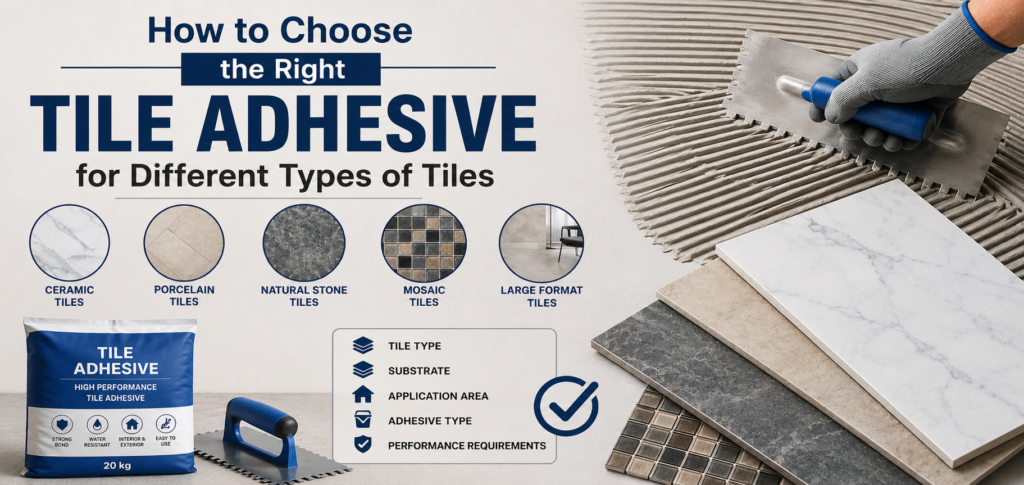
Choosing the right tile adhesive can feel confusing. There are so many types on the market today.
But picking the wrong one can cause tiles to crack, pop up, or fall off later. This guide makes it simple. By the end, you will know exactly which tile fixing adhesive works best for your project in India.
Quick Answer
The right tile adhesive depends on your tile type, surface, and location. Cement-based adhesives work for ceramic tiles on normal floors. Polymer-modified adhesives suit large-format and vitrified tiles. Epoxy-based adhesives are best for wet areas like bathrooms, pools, and outdoor spaces in India’s heat. Always match the adhesive to the tile’s weight, size, and water exposure.
Why Tile Adhesive Selection Matters So Much
Tiles are heavy. They need strong support to stay fixed on a wall or floor for years.
A weak or wrong adhesive cannot hold this weight properly. This phenomenon is called adhesive failure.
In India, high heat and humidity make this problem worse. The wrong glue can weaken faster in hot weather.
Good tile adhesive stops tiles from moving, cracking, or lifting. It keeps your floor safe and strong.
Types of Tiles and the Adhesive They Need
Different tiles have different needs. Let’s break this down simply.
1. Ceramic Tiles
Ceramic tiles are light and common in homes. They are used in kitchens and living rooms often.
A standard cement-based tile adhesive works well here. It gives strong grip at a low cost.
2. Vitrified Tiles
Vitrified tiles are heavier and less porous than ceramic ones. They absorb very little water.
This means normal adhesive may not stick well. You need a polymer-modified adhesive for a stronger bond.
3. Natural Stone Tiles
Marble, granite, and sandstone fall under natural stone. These stones can stain easily.
Use a white cement-based adhesive with low moisture content. This prevents staining and discoloration.
4. Large-Format Tiles
Large tiles are trending in modern India homes. They look elegant but are harder to fix.
These tiles need high-bond-strength adhesive. It must resist sagging and slipping during installation.
5. Glass and Mosaic Tiles
Glass tiles are delicate and often used in pools or decorative walls. They need a flexible adhesive.
This flexible bond adjusts to small movements without cracking the glass.
Adhesive Guide Table
Here is a simple table to help you choose faster.
| Tile Type | Best Adhesive Type | Common Use Area |
| Ceramic Tiles | Cement-based adhesive | Kitchen, living room |
| Vitrified Tiles | Polymer-modified adhesive | Living room, flooring |
| Natural Stone | White cement adhesive | Lobby, staircases |
| Large Format Tiles | High-bond adhesive | Modern interiors |
| Glass or Mosaic Tiles | Flexible adhesive | Pools, bathrooms, decor walls |
| Outdoor or Wet Areas | Epoxy-based adhesive | Terrace, bathroom, pool deck |
Why India’s Climate Changes Your Adhesive Choice
India has very high heat for most of the year. This affects how tile adhesive performs.
Standard adhesives can dry too fast in strong sun. This condition weakens the bond over time.
For outdoor tiling, always choose heat-resistant tile adhesive. It handles temperature changes better.
For wet areas like bathrooms and pools, pick waterproof tile adhesive. It resists moisture damage fully.
Simple Steps to Pick the Right Adhesive
Follow these easy steps before buying any adhesive.
- Check your tile type first: Ceramic, vitrified, stone, or glass
- Check the tile size and weight carefully
- Check if the area is wet, dry, indoor, or outdoor
- Check India’s weather exposure for outdoor tiling
- Always choose branded, tested construction chemicals
These small checks save you from costly repair work later.
Common Mistakes to Avoid
Many people make the same tiling mistakes. Avoid these simple errors.
- Using ceramic adhesive for heavy vitrified tiles
- Skipping waterproof adhesive in bathrooms
- Ignoring surface preparation before tiling
- Buying cheap, unbranded adhesive products
Good preparation and the right product prevent most tiling problems.
Why Surface Preparation Also Matters
Adhesive alone cannot fix a weak surface. The base surface must be clean and level first.
Dust, oil, or cracks weaken adhesive grip badly. Always clean and level the surface before tiling starts.
This step works together with the right adhesive. Both are equally important for long-lasting tiles.
Need the right tile adhesive for your India project? CretePro Trading supplies trusted construction chemicals, adhesives, grouts, and waterproofing solutions from leading global brands.
Get expert guidance and quality materials, delivered on time, every time. Contact CretePro Trading today for a free consultation.
Frequently Asked Questions
- What is the best tile adhesive for bathroom tiles in India?
Epoxy-based or waterproof tile adhesive works best for bathrooms. It resists constant moisture and prevents tiles from loosening over time.
- Can I use the same adhesive for floor and wall tiles?
No, wall tiles need lighter, quick-grip adhesive. Floor tiles need stronger, heavy-duty adhesive to support foot traffic and weight.
- Why do tiles pop up after some months in India?
This usually happens due to wrong adhesive choice, poor surface prep, or heat expansion. Using proper polymer-modified or heat-resistant adhesive prevents this issue.